
The “All-Inclusive” Burnout: Why Your Nervous System Needs a Reservation for Rest
The “All-Inclusive” Burnout: Why Your Nervous System Needs a Reservation for Rest
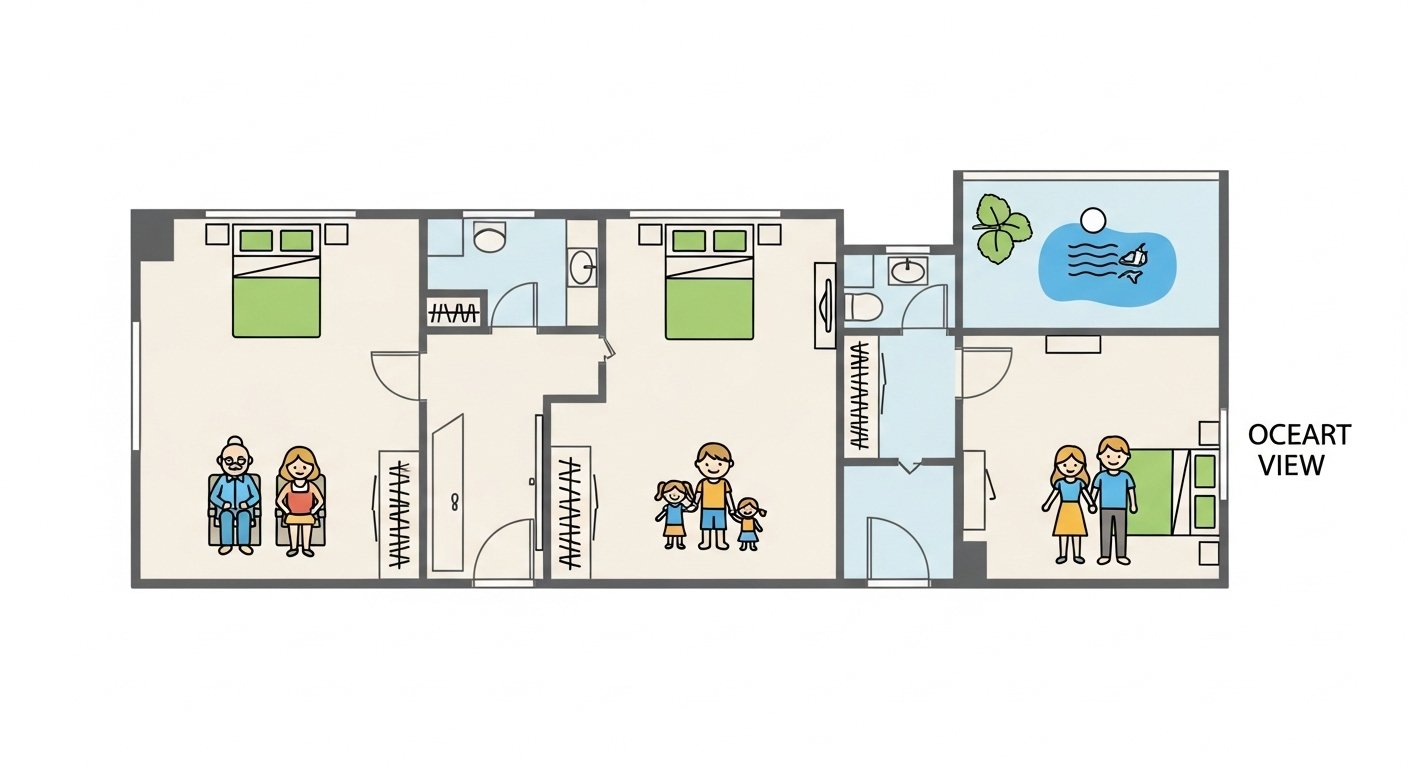
Imagine you are standing in the lobby of a beautiful all-inclusive resort. You have the keys to five different rooms in your hand. One room is for your demanding job. Another is for your kids’ school schedule. The third is for the laundry pile that never ends. The fourth is for that friend who always needs a shoulder to cry on. The fifth? Well, that is for your own health, but you have not even stepped inside that one yet. You are running between floors, trying to keep every door open and every guest happy. You are exhausted, but you cannot stop. This is what burnout feels like for so many of us. We are booking too many rooms in our lives and forgetting that we only have one body to live in.
For many women, the word “tired” does not even begin to cover it. It is a deep, bone-weary exhaustion that sleep cannot fix. You might crawl into bed at 9:00 PM, but your brain stays awake. It replays every conversation and every “to-do” list item. You feel wired but tired. This is not just a busy week or a lack of coffee. It is your nervous system screaming for help. When we push ourselves too hard for too long, our bodies get stuck in survival mode. We are living in a state of high alert, waiting for the next crisis to happen. This constant stress changes how our brains and bodies work. It affects our mood, our digestion, and our ability to feel joy.
Burnout recovery is not about taking a one-week vacation and coming back to the same mess. It is about learning how to regulate your nervous system so you can feel safe in your own skin again. It is about realizing that you cannot “book” every room and expect to stay sane. You have to learn how to close some doors so you can finally rest in the room that matters most: your own well-being. This journey starts with honesty. You have to admit that you are running on empty. You have to stop pretending that you have it all together. Once you name the burnout, you can start to heal from it.
Why You Feel “Tired but Wired” (The Science of Dysregulation)
Your nervous system is like the electrical wiring in a house. When everything is working well, the lights are bright and the appliances run smoothly. But when you overload the circuit, the breakers trip. In your body, the “breakers” are your stress hormones like cortisol and adrenaline. When you are constantly stressed, your body keeps pumping out these hormones. It thinks you are being chased by a tiger, even if you are just answering an email. Over time, your system becomes dysregulated. This means it loses the ability to switch from “fight or flight” mode back into “rest and digest” mode.
This state of dysregulation is why you feel so strange. You might feel anxious for no reason. You might get angry over small things, like a dropped spoon or a red light. Your body is stuck in a loop of high stress. It has forgotten how to relax. This is a physiological response, not a character flaw. You are not “weak” or “lazy.” Your internal wiring is simply overwhelmed. Research shows that chronic stress can actually shrink the parts of the brain responsible for memory and emotional control [1]. This is why brain fog is such a common symptom of burnout. Your brain is trying to save energy by shutting down non-essential functions.
To heal, you have to show your body that the “tiger” is gone. You have to give your nervous system signals of safety. This does not happen overnight. It takes time and consistency. You have to teach your body that it is okay to turn the lights down and rest. This process is called “toning the vagus nerve.” The vagus nerve is the main highway for your parasympathetic nervous system, which is the part that helps you relax. By using simple tools like deep breathing and gentle movement, you can start to flip the switch from stress back to calm.
Signs Your Nervous System is Overloaded
Most of us are so used to feeling stressed that we don't even recognize the signs anymore. We think it is normal to have a tight jaw or a stomach that always feels slightly off. But these are messages from your body. If you listen closely, your body is telling you exactly where it is hurting. One of the most common signs of an overloaded nervous system is muscle tension that never goes away. You might feel like your shoulders are up by your ears. Even when you try to relax, your muscles stay guarded. This is your body staying ready for a fight that never comes.
Another major red flag is how you react to small stressors. If a minor change in plans feels like the end of the world, your system is likely dysregulated. When your “window of tolerance” is small, everything feels like a threat. You might find yourself snapping at your partner or crying over a commercial. This emotional volatility is a sign that your brain is struggling to process information. You are living on the edge of your capacity. Other signs include digestive issues like bloating or IBS, as well as a weakened immune system. When you are in survival mode, your body deprioritizes things like digestion and fighting off colds [2].
Sleep is also a huge indicator. If you find yourself waking up at 3:00 AM with a racing heart, that is a cortisol spike. Your body is trying to wake you up to deal with a perceived danger. This “tired but wired” feeling is the hallmark of burnout. You are physically exhausted, but your nervous system is too agitated to let you fall into a deep, restorative sleep. Recognizing these signs is the first step toward recovery. Instead of pushing through the pain, you can start to respond with compassion. You can say, “I see that my body is stressed, and I am going to help it feel safe.”
The First Step to Recovery: Giving Yourself Permission to Cancel
The hardest part of burnout recovery is not the lifestyle changes. It is the mental shift. You have to give yourself permission to cancel. You have to stop being the person who does everything for everyone. This is not selfish; it is survival. When you are in burnout, your body is at its limit. You cannot add more to your plate and expect to get better. You have to start by clearing space. This means saying “no” to things that drain your energy. This could be a social event, a volunteer project, or even a chore that can wait. You have to protect your peace like your life depends on it.
Think of your energy like a battery. When you are in burnout, your battery is at 5%. You cannot run a marathon on 5%. You can barely make it through the day. To recharge, you have to stop using so much power. You have to put yourself in “low power mode.” This means prioritizing rest and reducing your mental load. You might feel guilty about this at first. You might worry about letting people down. But if you don't take care of yourself, you will eventually have nothing left to give. You will break down, and then you won't be able to help anyone.
Giving yourself permission to cancel is an act of self-love. It is acknowledging that you are human and that you have limits. It is also about setting boundaries. Boundaries are not walls; they are gates. They let the good things in and keep the bad things out. You have to decide what is worth your energy and what is not. If something makes you feel anxious or drained, it might be time to step back. This could be a toxic relationship or a job that asks too much of you. You have to be the gatekeeper of your own life. You have to decide who and what gets your time.
Practical Tools to Calm Your Body (Breath, Food, Movement)
Once you have cleared some space, you can start to use practical tools to calm your body. These are simple things you can do every day to help your nervous system feel safe. One of the most powerful tools is your breath. When you are stressed, your breathing becomes shallow and fast. This tells your brain that there is a threat. By slowing down your breath, you can send a signal of safety to your brain. Try breathing in for four counts and out for six counts. This longer exhale activates your parasympathetic nervous system. It is like a manual override for your stress response.
What you eat also matters for burnout recovery. When you are stressed, you might crave sugar and caffeine. These give you a quick burst of energy, but they also cause a crash. This makes your nervous system even more agitated. Instead, focus on foods that support your adrenal glands and nervous system. Magnesium is a key mineral for relaxation. You can find it in leafy greens, nuts, seeds, and dark chocolate. Protein and healthy fats are also important for keeping your blood sugar stable. When your blood sugar is stable, your mood is more stable too. This helps you avoid the “hangry” feelings that can trigger a stress response.
Movement is another great tool, but you have to be careful. If you are in deep burnout, a high-intensity workout might be too much for your body. It can actually increase your cortisol levels and make you feel worse. Instead, try gentle movement like walking, stretching, or restorative yoga. These help you move the stress out of your body without overloading your system. The goal is to feel more energized after your workout, not more exhausted. Listen to your body and do what feels good. Sometimes, the best movement is a slow walk in nature or a few minutes of gentle stretching on the floor.
Reclaiming Your Energy for the Long Haul
Recovery is not a straight line. You will have good days and bad days. Some days you will feel like you are finally getting your energy back. Other days, you will feel like you are right back where you started. This is normal. The key is to stay consistent with your self-care. Don't stop doing the things that help you just because you feel a little better. You have to build a foundation of health that can support you for the long haul. This means making rest a non-negotiable part of your life. It means continuing to set boundaries and say “no” when you need to.
Reclaiming your energy also means finding joy again. When we are burned out, we lose touch with the things that make us feel alive. We are so focused on surviving that we forget how to thrive. As you start to heal, try to reconnect with your passions. What used to make you happy? Was it painting, gardening, reading, or spending time with friends? Make time for these things, even if it is just for a few minutes a day. Joy is a powerful antidote to burnout. it helps you shift from a state of survival to a state of connection and creativity.
Remember that you are not alone in this. So many women are going through the same thing. We are all trying to do too much and be too much. But you don't have to live this way. You can choose a different path. You can choose to prioritize your health and your happiness. You can choose to be the person who takes care of herself first. This is the greatest gift you can give to yourself and to the people you love. When you are well, you can show up for others in a way that is sustainable and honest. You can live a life that feels good on the inside, not just one that looks good on the outside.
You are worth the effort it takes to heal. You are worth the time it takes to rest. You are worth the space it takes to grow. Don't let anyone tell you otherwise. You have the power to change your life, one small step at a time. Start today by taking a deep breath and giving yourself permission to slow down. You don't have to have all the answers. You just have to take the next right step for your own well-being. You are doing a great job, even when it feels hard. Keep going, and remember that you are stronger than you think.
References
[1] McEwen, B. S. (2007). Physiology and neurobiology of stress and adaptation: central role of the brain. Physiological Reviews, 87(3), 873-904. https://doi.org/10.1152/physrev.00041.2006
[2] Segerstrom, S. C., & Miller, G. E. (2004). Psychological stress and the human immune system: a meta-analytic study of 30 years of inquiry. Psychological Bulletin, 131(4), 601-630. https://doi.org/10.1037/0033-2909.130.4.601